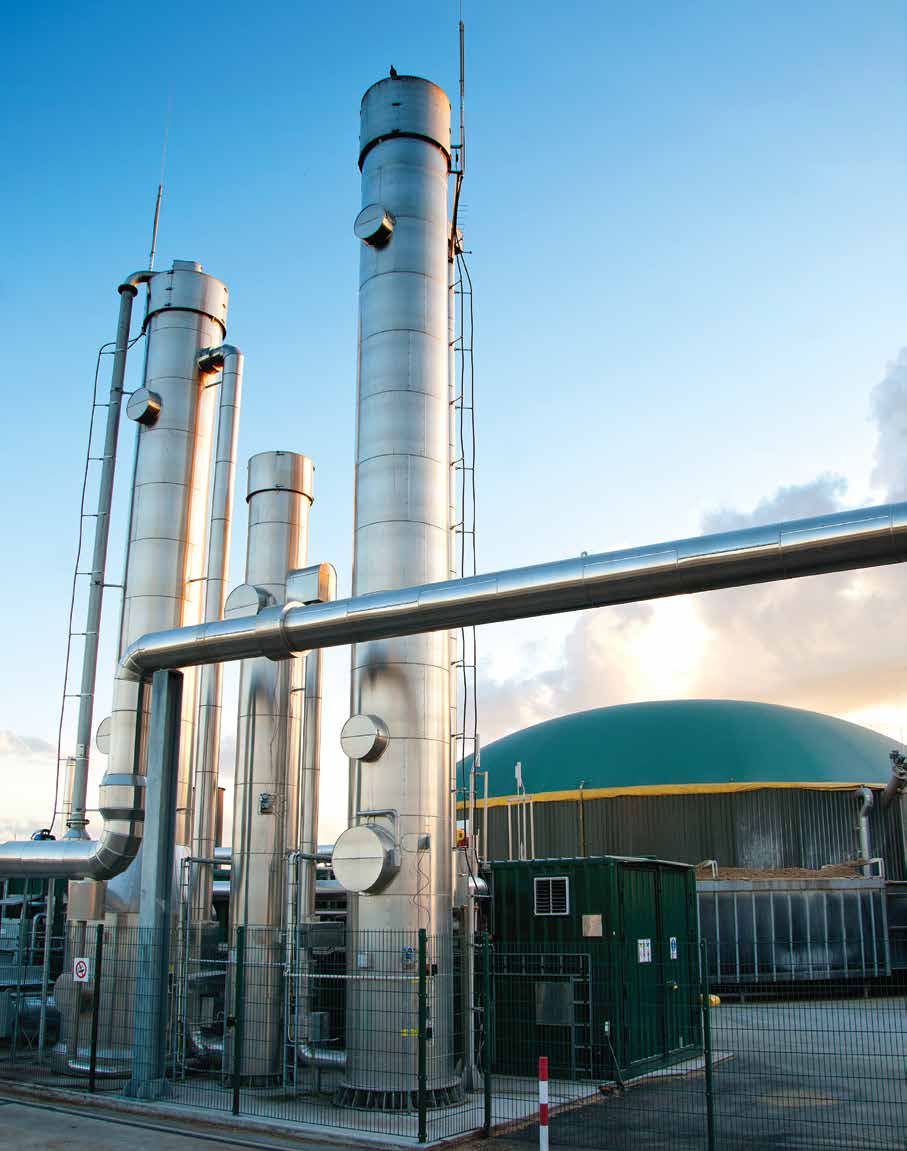
Partner archive · Anaerobic digestion
Unstable mixed-feedstock digester: H₂S down 97%, methane concentration up from 58% to 68.6%.
Mixed feedstock digester, farm and food waste — published partner study · Published partner field data · 31 March 2026
The challenge
As published: process instability, high H₂S at around 1,231 ppm, and methane concentration sitting at 58% — low enough to hurt both gas value and CHP performance. Hydrogen sulphide at that level is corrosive to engines, compressors and upgrading equipment, so it carries a maintenance cost on top of the lost gas quality.
The approach
A BGE₁ and BGE₂ programme, again targeting hydrolysis and stability together rather than dosing for methane directly. The reduction in H₂S is an indirect effect: more complete substrate conversion leaves less material to follow the sulphate-reducing pathway.
Results
−97%
H₂S (partner figure)
~1,231 → ~31 ppm
H₂S, before and after
58% → 68.6%
Methane concentration
Eliminated
Foam and solids build-up
A 10-point gain in methane concentration and a near-total collapse in H₂S are at the strong end of what Ecological Laboratories report, and they say so — these are historical field data and results vary with system conditions. Their International Technical Sales Manager is direct about the honest range: typical field improvements in biogas output are 10–15%, with higher figures in selected applications, and methane concentration gains of 3–7% under optimised conditions. We quote both the outlier and the typical range on purpose, because an operator who is told only the best case stops believing the rest.
Source documentation
Ecological Laboratories case archive (opens in a new tab)